Over the course of generations, the patriarchal aspect of society has warped the male gaze into perceiving and simplifying women as sexual objects. Evidence of this statement can be found throughout history, from Renaissance paintings to current day cinema. How patriarchy depicts women as lesser, or as Berger puts it, "She has to survey everything she is and everything she does because how she appears to others, and ultimately how she appears to men, is of crucial importance for what is normally thought of as the success of her life."(Berger, 46). To simplify, as a societal standpoint, women can only survive and succeed if they conform to a standard of appearance that men subjectively evaluate.
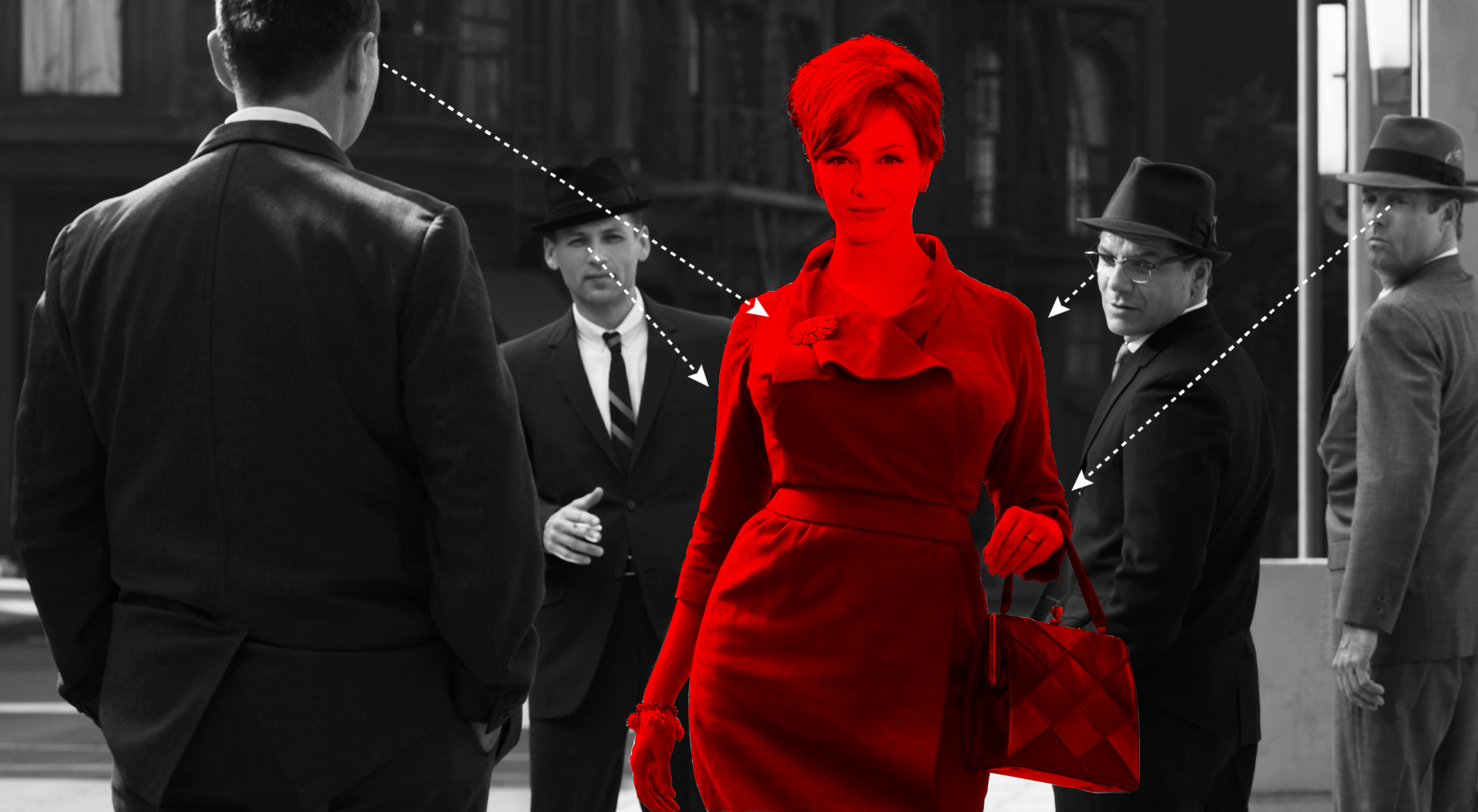
Patriarchy plays an integral role in the development of male gaze. The two coincide with one another in order to create this system of oppression. Male gaze creates standards of how a normal woman should look. Patriarchy takes into account of not only gender, but race as well, forming intersectional feminism. According to dictionary.com, intersectionality is the theory that the overlap of various social identities, as race, gender, sexuality, and class, contributes the specific type of systemic oppression and discrimination experienced by an individual. Women of color may not be presented the same amount of opportunity as a white woman, despite how limited. Patriarchy affects the emotional and mental state of both men and women alike. "As their daughter I was taught that it was my role to serve, to be weak, to be free from the burden of thinking, to caretake and nurture others. My brother was taught that it was his role to be served; to provide; to be strong; to think, strategize, and plan; and to refuse to caretake and nurture." (Bell Hooks, 18). This method of upbringing only solidifies the toxic dynamic of male gaze and patriarchy.

Berger mentions how women can only be seen as nude but never naked. "To be naked is to be oneself. To be nude is to be seen naked by others and yet not recognized for oneself. A naked body has to be seen as an object in order to become a nude. Nakedness reveals itself. Nudity is placed on display." (Berger, 54). In early depictions of women in paintings were by male painters. Any depictions of men in paintings had their attention on the woman depicted, while her attention looks to the spectator of the painting in most cases. "In the average European oil painting of the nude the principal protagonist is never painted. He is the spectator in front of the picture and presumed to be a man. Everything is addressed to him. Everything must appear to the result of his being there. It is for him that the figures have assumed their nudity. But he, by definition, is a stranger with his clothes still on." (Berger, 54). From what Berger mentions, I see it happening similarly happening in older comics. Women are not naked per say, but are distorted to an unrealistic standard in comics and dressed more provocatively in cinema under male direction.

Works Cited
Berger, John, and Michael Dibb. Ways of Seeing. London: BBC Enterprises, 1972
Hooks, Bell. Teaching Critical Thinking: Practical Wisdom. , 2010. Print

No comments:
Post a Comment