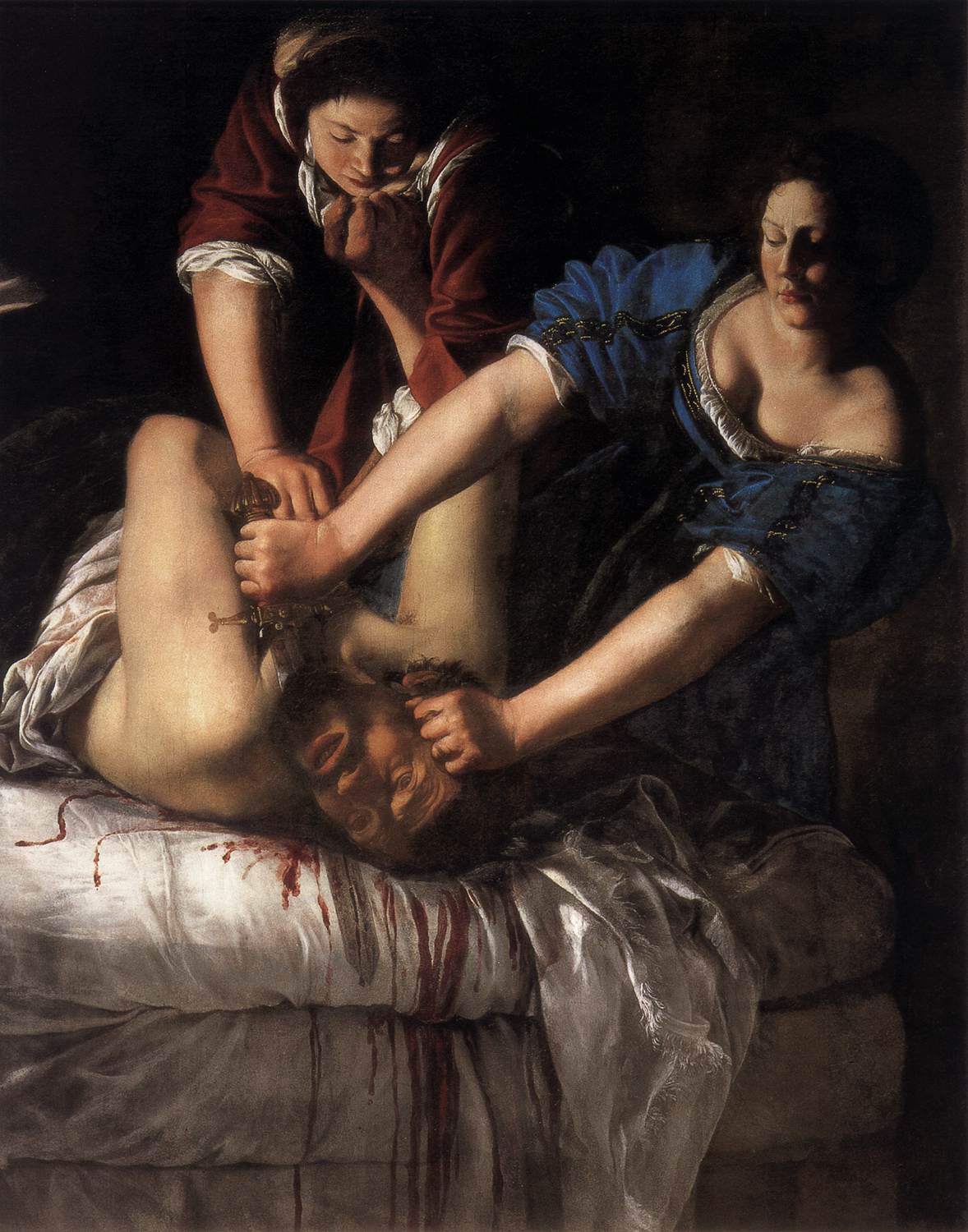
Artemisia Gentileschi, Judith Slaying Holofernes, 1620-21.
Artemisia's father recognized her strengths as an artist and wanted to find someone to help her refine her talent, which is why he enlisted the help of his friend and fellow painter, Agostino Tassi. Rather than mentoring the young Artemisia, Tassi savagely raped the young woman and only stopped after Artemisia defended herself by ripping off a piece of his flesh with her bare hands. The Gentileschi's took Tassi to the Papal court for his crimes to save Artemisia's reputation. While the grotesque details of what Tassi had done outside of this animalistic act began to emerge (i.e., cheated on his wife with his sister-in-law and was even planning to murder his spouse), the court and the public became much more focused on Artemisia and her place in society. Artemisia's reputation underwent considerable scrutiny and she was even tortured in an attempt to ensure that she was telling the truth for this case.
I had seen Judith Slaying Holofernes in an Art History class back in high school and had always been infatuated with how a woman at this time period could have produced something as realistic and violent as what Artemisia had created. The blood and scene itself are much more intense than what her male counterparts (i.e., Caravaggio) have produced. However, I am now aware of the passion that she had poured into creating this particular, vivid painting and have a better understanding of her creativity. I believe that this particular painting, the Biblical scene it represents, and even Artemisia's story has aged in such a distinctive way.
We find ourselves in the midst of the #MeToo movement, which has focused on the experiences of sexual violence survivors and given victims the strength to stand up against their abusers. I believe that Artemisia and her story resonate with many of the stories that have been brought to the light in growing numbers over the course of the last couple of years. Many men in Hollywood and in other areas (particularly in the entertainment industry) have utilized their place and power to manipulate and take advantage of women, much like what unfolded between Artemisia and her assaulter. These women have at times seen these men as mentors, teachers, colleagues, friends, and so forth only to be betrayed to the most despicable extent by them. One of the accounts that have remained with me throughout the growth of the #MeToo movement is that of Professor Christine Blasey Ford, who was sexually assaulted in high school by Brett Kavanaugh, who was nominated to serve the U.S. Supreme Court in the summer of 2018. The Senate's hearing on the accusations surrounding Kavanaugh's actions was televised and I clearly remember the backlash Blasey faced whilst testifying against her assaulter. Much like Artemisia, Blasey's reputation found itself on the line throughout this testimony, although they were both victims in their situations.
https://www.britannica.com/biography/Artemisia-Gentileschi

No comments:
Post a Comment