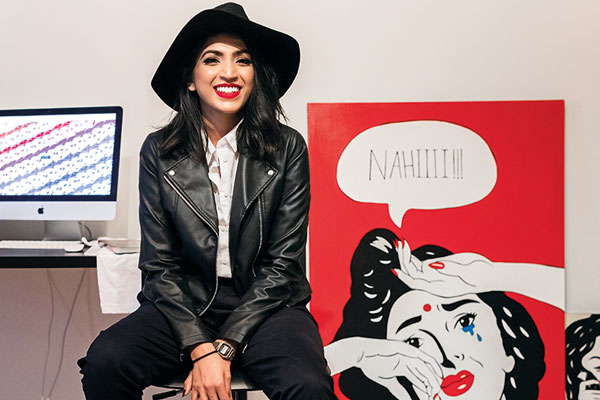
Maria Qamar is a first-generation Canadian from a traditional South Asian family. She moved to Canada at the age of nine in 2001 and was forced to endure bullying and racism as a young girl in a post 9/11 Toronto. Qamar found her artistic voice through Instagram where her illustrations resonated with the Desi community, particularly the second generation. Art became a means for her to handle realities of being brown and South Asian in the early 2000s North American context. Her work is collected by Mindy Kaling and was featured on The Mindy Project. She is an Instagram sensation and the author of the Trust No Aunty published in 2017. Her artwork has been shown in the AGO in Toronto, Mumbai Comic Con, and the Oxo Tower Wharf in London, England. She has been featured on NPR, CBC, HarpersBAZAAR.com, and in The Toronto Star, FLARE Magazine, Bon Apetit and several other publications. Maria currently lives and works in Toronto, Canada.

Chitra Ganesh was born and raised in Brooklyn, NY, where she currently lives and works. Her drawing, installation, text-based work, and collaborations are inspired by buried narratives and marginal figures typically excluded from official canons of history, literature, and art. She is widely recognized for her experimental use of comic and large-scale narrative forms to communicate submerged histories and alternate articulations of femininity to a broader public.Her work has been widely exhibited both in India and the United States. Ganesh draws from a broad range of material, including the iconography of Hindu, Greek and Buddhist mythology, 19th century European portraiture and fairytales, archival photography, and song lyrics, as well as contemporary visual culture such as Bollywood posters, anime, and comic books. Using a process of automatic writing, she probes this visual and textual material to connect seemingly disparate narratives, and reveal uncanny moments of absence and buried desire. Fragments of poetic language cohere with her visual iconography to produce fresh, nonlinear narratives offering audiences untold tales from both collectively imagined pasts and distant futures.

Well known for her use of dense patterns of polka dots and nets, as well as her intense, large-scale environments, Yayoi Kusama works in a variety of media, including painting, drawing, sculpture, film, performance, and immersive installation. Born in Japan in 1929, Kusama came to the United States in 1957 and quickly found herself at the epicenter of the New York avant-garde. After achieving fame through groundbreaking exhibitions and art “happenings,” she returned to her native country in 1973 and is now one of Japan’s most prominent contemporary artists. Yayoi Kusama tells the story of how when she was a little girl she had a hallucination that freaked her out. She was in a field of flowers when they all started talking to her! The heads of flowers were like dots that went on as far as she could see, and she felt as if she was disappearing or as she calls it ‘self-obliterating’ – into this field of endless dots. This weird experience influenced most of her later work.

Artemisia Gentileschi was an early Italian Baroque painter, and the only female follower of Caravaggio, whom she worked with in Italy in the early 17th century. Her innovative compositions and focus on Biblical heroines set her apart from her male contemporaries and have lead to the celebration of Gentileschi as a painter with a uniquely female perspective. In 1616, she was the first woman to be accepted into the Florentine Academy of Fine Arts, where she continued her artistic education. During this period, Gentileschi was held in high esteem by both the royal court and scholars, eventually establishing a much-heralded relationship with the astronomer, philosopher, and physicist, Galileo. She and her husband had two daughters, both of whom eventually became painters. When Gentileschi and her husband separated, she became the head of her own household, enjoying a freedom and independence known to few of her female contemporaries. She and her daughters frequently moved in Italy for career opportunities and to accommodate patronage that included the Medici family and King Charles I of England. In 1641, Gentileschi relocated to Naples where she lived out the remainder of her life. While Gentileschi was a recognized painter in her lifetime, after her death a great deal of her work fell into obscurity and was often attributed to other followers of Caravaggio or to her father.
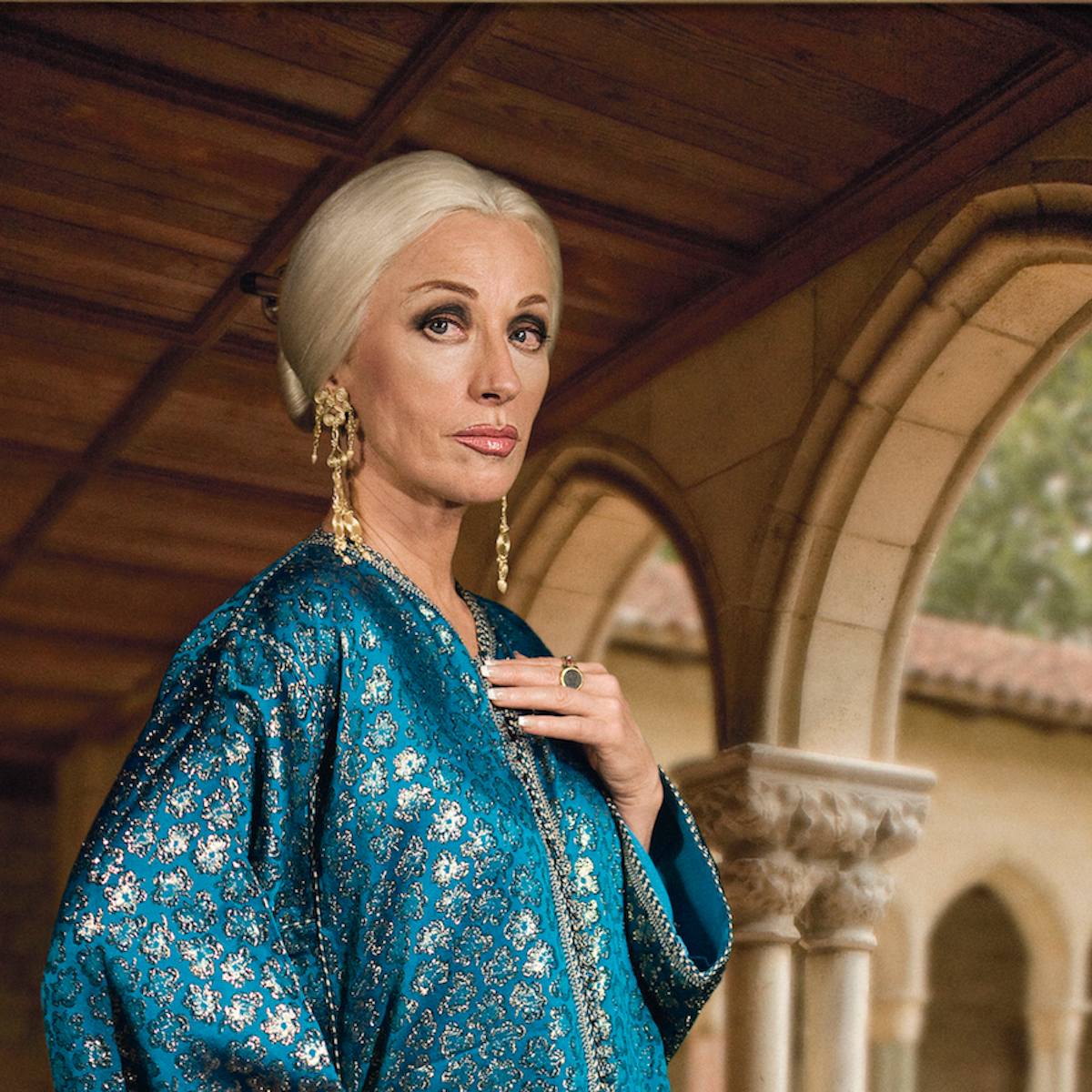
Cindy Sherman is widely recognized as one of the most important and influential artists in contemporary art. Throughout her career, she has presented a sustained, eloquent, and provocative exploration of the construction of contemporary identity and the nature of representation, drawn from the unlimited supply of images from movies, TV, magazines, the Internet, and art history. Working as her own model for more than 30 years, Sherman has captured herself in a range of guises and personas which are at turns amusing and disturbing, distasteful and affecting. To create her photographs, she assumes multiple roles of photographer, model, makeup artist, hairdresser, stylist, and wardrobe mistress. With an arsenal of wigs, costumes, makeup, prosthetics, and props, Sherman has deftly altered her physique and surroundings to create a myriad of intriguing tableaus and characters, from screen siren to clown to aging socialite.
Works Cited
“Artemisia Gentileschi.” Brooklyn Museum: Artemisia Gentileschi, www.brooklynmuseum.org/eascfa/dinner_party/place_settings/artemisia_gentileschi.
“Cindy Sherman: MoMA.” The Museum of Modern Art, www.moma.org/calendar/exhibitions/1154.
“Maria Qamar.” Richard Taittinger Gallery, richardtaittinger.com/artist/maria-qamar/.
“Queens Museum.” Queens Museum, queensmuseum.org/events/artist-chitra-ganesh-walkthrough.
Tate. “Who Is Yayoi Kusama? – Who Are They?” Tate Kids, www.tate.org.uk/kids/explore/who-is/who-yayoi-kusama.
“Yayoi Kusama.” Yayoi Kusama | Whitney Museum of American Art, whitney.org/exhibitions/yayoikusama.

No comments:
Post a Comment